FREE SHIPPING WITH PURCHASE OF 2 or more 8ml blends Use Promo Code FREESHIP
s

Blog

Is jojoba an oil or a wax?

Here at Tazeka, we love jojoba! It’s hands-down one of the best moisturizers for skin, and one of the best carriers for essential oils. We use it as a base in our aromatherapy blends.

But despite its popularity, there are a lot of misconceptions about jojoba. Time to clear those up, and explain just what it is about jojoba that’s earned it the top spot among our favorite carrier oils.


Oil or wax?

First of all, jojoba isn’t technically an oil. Jojoba is a liquid wax. If you store it in the refrigerator, you’ll see it harden. Don’t worry—it’ll liquefy again once it warms up.

What’s the difference between an oil and a wax?


Jojoba and your skin

Your skin contains sebaceous glands along with hair follicles—glands which produce oil that keeps your skin and hair moisturized. This oil is called “sebum.” Sebum contains wax esters, among other components. (Jojoba also contains wax esters, remember?)

The molecular structure of jojoba wax resembles sebum very closely. So when you smooth jojoba over your skin, your skin knows just what to do with it. Jojoba wax is more readily absorbed into your skin than beeswax, but it does provide a protective layer against the elements.

As you get older, your skin can produce less sebum. It can also be affected by the climate, like dry weather, too much sun, and exposure to cold and strong winds. Using jojoba is a great way to keep your skin happy with a substance it recognizes.


Jojoba and essential oils

Remember that jojoba never goes rancid? This is thanks to its stable molecular structure. This stability is very helpful when it comes to blending with essential oils. It can help get the maximum shelf lives out of the oils. Also, because jojoba is unscented, it allows the true scents of essential oils to shine through.

As jojoba is absorbed into your skin, the essential oils blended into it are absorbed too.


Do you use jojoba wax as a body product, or maybe for your hair? Share your favorite ways to use it below!


Source.

Source.

Image source.

X
Lifestyle changes and aromatherapy blends for headaches

Last week, we talked about stress headaches—what they are and what triggers them.

This week’s topic is how to handle headaches. The goal is to soothe the pain or prevent it altogether, and ultimately find long-term solutions to stop headaches from disrupting your daily life.

If you rarely experience headaches, or only get them every now and then, taking an over-the-counter (OTC) medication might not be a bad option. Long-term, regular use of such drugs can become a problem, though. Side effects can set in, and medicine like this typically masks symptoms instead of addressing their cause.


Aromatherapy blends for headaches

One good option is using aromatherapy blends for headaches. Aromatherapy acts on a more holistic level than OTC drugs, so using it regularly can bring you into alignment with health while soothing your symptoms.

Peppermint oil is a popular ingredient in aromatherapy blends that address head pain; it has a very soothing, cooling effect said to reduce inflammation. Lavender—a powerhouse aromatherapy oil for many kinds of pain—is another good choice.

To use aromatherapy blends for head pain, apply them to your scalp over the area of tension, and to the back of your neck. Be careful not to get them too close to your eyes. The fumes can be strong.

The good thing about using essential oils for head pain, as opposed to OTC medications, is that properly-diluted aromatherapy blends are generally safe for long-term use.


Reduce stress to reduce headaches

If headaches are a chronic issue in your life, some lifestyle changes may reduce their frequency.

  • Check your posture. Poor posture can cause headaches because your muscles are held in unhealthy positions for too long. It can reduce circulation, and strain muscles, tendons and ligaments.
  • Make sure any chairs you use for long periods of time are ergonomically designed to support posture. The same goes for your mattress and your shoes (yes, your shoes!)
  • Eat a balanced diet. Eliminate foods that may cause reactions, subtle levels of inflammation, or allergies.
  • Drink more water. You probably don’t need eight glasses a day, but you probably need more than you get.
  • Get relaxation massages.
  • Plan your day before you begin it—either the night before, or first thing in the morning. This helps you prioritize, so you don’t feel like you should be accomplishing more than you actually get done.
  • Practice meditation and deep breathing.
Do you have any tips for soothing headaches or reducing their frequency? We’d love to hear your success stories in the comments below!


Source.

Image source.

What causes headaches, anyway?

Headaches are one of the most common health problems people face every day.

Most headaches fall under the definition of “stress headaches” or “tension headaches.” They can cause pain throughout the head, only on one side of the head, in an isolated area, or even radiating down through the neck, shoulders, and upper back.

No fun.

While stress headaches aren’t as debilitating as migraines, they can be very painful, and can make going about your day difficult or impossible. Some people get headaches chronically, and some can even predict when their headaches will strike every day or week.

It can lead to regular use of over-the-counter painkillers, which can cause other health problems. Overuse of aspirin, for instance, can cause stomach bleeding.


Despite how common stress headaches are, doctors and researchers aren’t really sure why they happen.

We have a lot of information about what triggers stress headaches. The obvious answer is stress, of course, but that can be broken down into different triggers, such as:

  • Overwork.
  • Staring at a computer for too long.
  • Poor posture.
  • Poor diet or food allergies.
  • Drinking alcohol.
  • Being overweight.
  • Becoming a parent.
  • Lack of sleep.
  • Overbooking your schedule.
  • Lack of close friends or relationships.
  • Lack of exercise
  • Too much exercise
  • Starting a new job.
  • Losing a job.

Take another look at that list, and see if you can catagorize each trigger as emotional, mental, or physical stress. That’s why there are so many kinds of stress headaches. This list just touches on some common triggers; there are many more, and some people have unique, specific triggers that you won't find on any list.


So what causes the pain?

We do know that women tend to get stress headaches more often than men, and middle-aged people get them more often than younger people. But we don’t know just why these triggers translate in the body as physical head pain. Most researchers think that triggers cause mixed signals to be sent along nerve pathways to the brain, and this makes our pain receptors more sensitive.

But that’s just a theory.

Whatever causes the pain, there are things you can do to relieve it. Next week, we’ll talk about ways to nourish yourself to prevent stress headaches, and to ease the pain if it does set in. A few tips we’ll cover include aromatherapy and self care.

(Click here for part two of the headaches post!)


Image source.

Source.

Source.

How light and dark affects your circadian rhythm and your sleep cycle

Pay attention to your sleep cycle.

 *

Restless night? Rough morning?

Maybe your circadian rhythms are a little off.

Your body has an internal clock that tells you when it’s time to sleep and wake up. A big influence on keeping your clock ticking in a timely fashion is the presence or absence of light. Simple, but true. That’s why it’s easier to sleep when the lights are off.

Light—including sunlight, artificial light, and even electronics (yes, that includes your TV and computer!)—signals a group of cells in your hypothalamus called the Suprachiasmatic Nucleus (SCN). The SCN then signals parts of your brain that influence hormones, body temperature, and other functions that make you feel awake or sleepy.

Darkness signals your brain to release melatonin, a hormone which makes you feel sleepy and helps you stay asleep. Light, on the other hand, signals the release of hormones like cortisol, which makes you feel more active and alert.

So when it’s time for bed, but you’re still on the computer, your entire body is being told to stay awake.

This bodily response to light and dark is your circadian rhythm.


Other things that can throw off your circadian rhythm are jet lag and being a teenager.

Jet lag can be a problem because your brain has to struggle with shifting light cues, forcing the body to change its current pattern. The time change—loss or addition of hours to the day—plays a role, but so do light and dark cues that your body isn’t adjusted to.

And being a teenager? Teenagers need a little more sleep than adults—about 9.25 hours a day. On top of needing more sleep, teens tend to produce melatonin a little later at night than kids and adults, so they’re literally “programmed” to stay up late and sleep in late. The early start-time of school days can be hard on teens’ systems, even without hours of homework and socializing to fit in.


How can you keep your rhythm steady?

Some studies have shown that camping for a week or so can help reset your circadian rhythm, because you’re removed from electronics and false light. Your body naturally readjusts to morning and night.

But the best way to keep your circadian rhythms steady is to keep a regular sleep schedule. Turn off electronics and dim the lights an hour or so before bedtime. Get into bright light as soon as possible after you wake up. Even on weekends, and days when you don’t have work or school, try to go to bed at the same time, and wake up at the same time. Your body, your mind, and your emotional health will pay you back tenfold!


Do you have other tips that help you get to sleep and wake up at a regular time? Share them in the comments below!


Source 1.

Source 2.

Image source.

Warm up with essential oils!

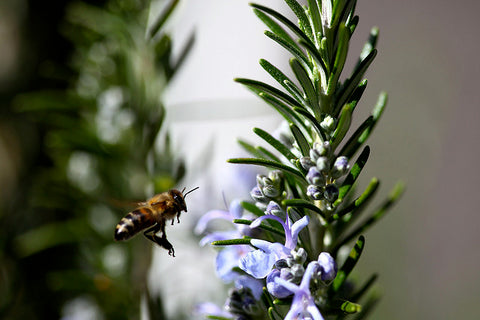
Rosemary, a great herb and oil to warm you up on a cold day.

Some essential oils are known to increase circulation to the areas of the body where they’re applied. That means they have a warming effect that can be perfect on a chilly day.
*
Warming oils seem to stimulate blood flow and help dilate blood vessels, so more blood can get through. This is thanks to the chemical components in the oils. (We’re not talking about synthetic chemicals, but natural components created by the plants that produce the aromatic essential oils. Camphor is an example of one of these chemical components.)


Some of our favorite warming oils are:

  • Rosemary (the camphor chemotype: Rosemary ct. camphor)
  • White Spruce
  • Elemi
  • Myrrh
  • Sugandha Kokila
  • Black Pepper
  • Ginger
 

Bath blends

Try three drops of myrrh and two of elemi in an ounce of full-fat milk, and pour it into your bath. The milk helps the essential oils distribute through the water. And milk is great for your skin, too!
*
We also love rosemary, white spruce, and sugandha kokila in baths. Sugandha kokila is nice if you’re bathing before bed, because it can help relax your nerves and get you ready for sleep.
*
Try not to use more than five drops of essential oil per bath.


Massage blend

We love myrrh, elemi, and a few drops of white spruce in an ounce of carrier, such as jojoba oil. Myrrh and elemi are made from resins, and resin-based oils are great for your skin. Rosemary is a nice choice, too. It’s an oft-cited favorite oil for stimulating scalp circulation (and hair growth!). Try blending rosemary and white spruce!
*
Ginger and black pepper are super-warming oils, but we don’t suggest just buying a bottle of ginger essential oil and rubbing it on your cold feet. Stick to a drop or two in your massage blend. These oils are spicy, and can irritate your skin if you use too much. It’s a good idea to add them to a blend with a resin, like myrrh, to balance the effects on your skin.
*
Stick to 12 drops of essential oil for every ounce of carrier you use. Then massage your cold feet, hands, arms, and legs!


Here's a tip! If you want to take your warming blend to the next level, consider using the carrier kpangnan butter. Never heard of it? Pentadesma butyracea, or kpangnan butter, is pronounced “panya” butter. It contains a component called “stigmasterol,” which is sometimes used for pain-relief and to reduce inflammation.


Image source.